By Pooja Chhabra
Drop Dead!!!!
Imagine a man on the street shouting the phrase with a number of exclamations observable in his tone. As you look around, you find that he was just kidding. Nobody dropped dead on the street. Despite shouting a lie he caught your eye.
That’s the power of performance.
What is a performance?
An artist in a costume on a stage performing with loud expressions and gestures following his/ her dialogues from the script. But the man on the street was not wearing any different costume or saying a dialogue from any script. But he got the audience to believe. That’s when his dialogue became his performance.
Theatre and performances are not limited to the stage, costume, dialogue, character and seated audience. A person’s audience is every other person who is ready to listen, be it an interviewer in a closed cabin, a bunch of people in a house warming party, or a crowd gathered around.
One can find their audience simply by keeping them hooked.
Similarly, life is a stage and we come across an audience everyday. What we miss is the opportunity to present our performance because we are waiting for that perfect stage with a director to call upon us Lights! Camera! Action!
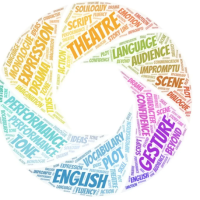
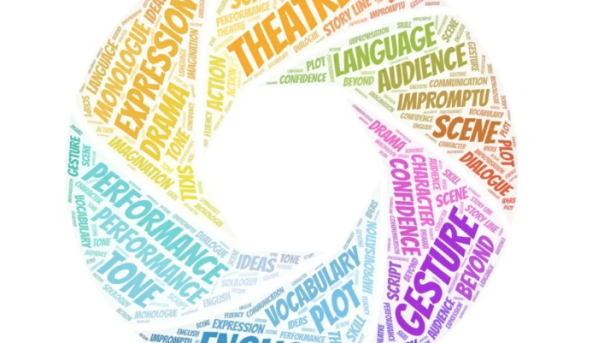
A performer doesn’t need these back drops. A performer needs Language, expressions, tone and gestures irrespective of other things.
A Language classroom is a perfect place to turn yourself into a performer for life. The question here is: What language class can bring to find the performer in you?
- Soliloquy
 When we hear this word we remember Shakespeare because he told us to be or not to be. Soliloquy reflects the state of mind of a character, reveals secrets and as a character, it allows you to be in those shoes; speak, act, behave.
- Monologue
Another important activity is Monologue when you know the stage is all yours and everyone else is here to listen. Be it a conversation or a real stage. Monologues prepare you to conquer that platform and audience watching you.
- Dialogue Conversation
 Real life doesn’t work on scripts. So our conversations can’t be planned but they can be practiced. A practiced conversation is always better than impromptu. This would prepare you to slide away from awkward silence in a small talk, a smooth goodbye and dealing with embarrassing questions.
- Performing on a script
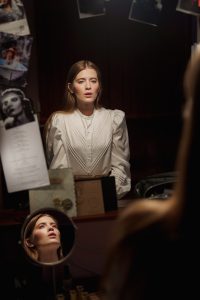 You must be wondering, isn’t this contradictory to the previous one. Yes sure does, but have you heard about stepping into someone’s shoes? That’s exactly the role of this activity in a language classroom. Learning sensitivity, empathy, cultural awareness all can be introduced comfortably.
- Improv Theatre
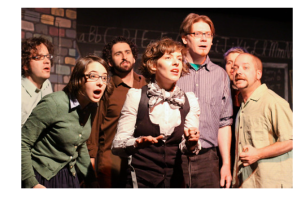 We live in a LIVE world without script, improv prepares you for that with characters on stage directing themselves and writing their own plot simultaneously. A fun, spontaneous experience to evaluate and enhance your creativity.
- One Act Plays
Speech improvement is synonymous to One Act Plays. You are not concerned with setting and costume, instead it aims at producing a single impact in one go and clearly specifies the message it intended to. A concise play apt for a short duration language session.
- Object Theatre
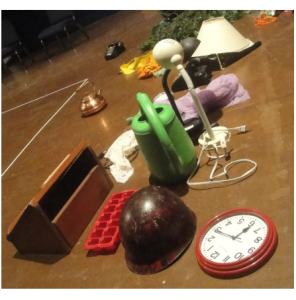 This is not a new concept to be introduced. This has been practiced by young kids for generations. We often secretly admire when we see kids talking to the toys. They are a part of object theatre from beginning. Personifying the object and thus learning important skills such as voice modulation, expressing emotions. It is a wonderful activity to explore the inner emotions of young children.
Theatre has a wider scope in a child’s lifestyle, development and growth so let’s not limit its scope. It’s time we incorporate theatre in language learning skills. Zeals Academy offers an integrated approach when it comes to language skills. Click the link below to register for the trial session. https://forms.gle/SHopD56ATJiMEhwV6