By Pooja Chhabra
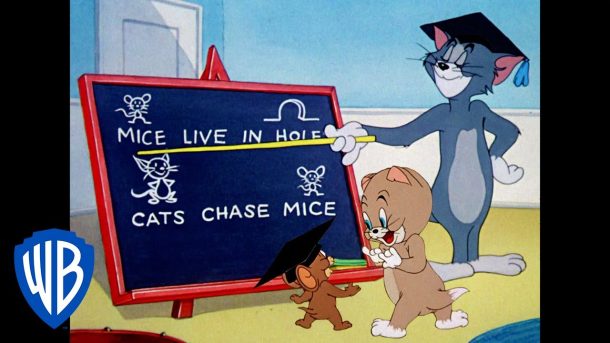
Do you remember Tom and Jerry from your childhood? A cartoon that we all must have lived, referring to our academics and us as former and latter.
Throughout our life academics chased us and we were creative beings finding ways to avoid it.
At Least, I did.
This brings us to the question: Why were we trying to avoid our academics?
The answer is simple: it wasn’t fun like watching Tom chasing Jerry. Since the very beginning we were mechanised into the art of switching our brain system after 45 minutes. As a new teacher will enter the class, we have to leave behind the mathematical aura and dig ourselves into science or English textbooks.
This clearly doesn’t match the idea of an integrated learning approach when we are integrating all subjects under one roof in a stipulated time.
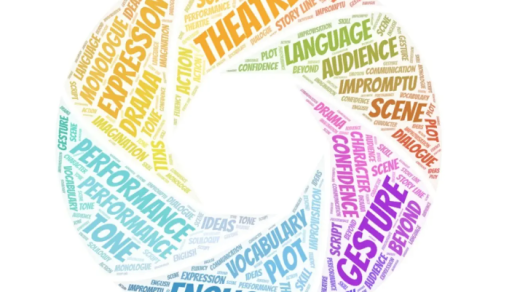
An integrated learning approach is a learning method where the curriculum is a hub of knowledge, understanding, skills and hands on experience. For Example: Language comprises literature, Vocabulary, phonetics, Reading, Listening, Speaking, Writing, Comprehension, Expression, Grammar and more.
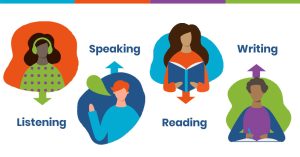
English Language Skills
While the approach we opt to impart all the skills is segregated rather than whole. There are many scenarios in which a language topic can cover many aspects following an integrated approach.
Scenario: Top to Bottom Approach
Pick a text whether you are introducing alphabets, phonetics, grammar, vocabulary or Expression. This brings contextual understanding along with other skills. A text would help a student comprehend the situation, picking up words and presenting their expressions in the context itself. A child is never too young or too old to understand a context. All we need is to pick the text wisely.
Scenario: Art in language
Art makes the lessons lively, colours bring warmth and imagination is always open to splurge. Whether you are dealing with adults or young learners, incorporate art that involves their senses. Young learners can draw out imagination on a paper, adults can implement their imagination in the form of imagery, a literary device.

Scenario: Critical and logical thinking
The thing that makes my processing, evaluation and analysis different from others is my background. My social, economic, political, technological environment can impact the way I perceive things happening in my surroundings. Consequently, I may have a different opinion than my peers and facilitators. A student needs a platform to present that opinion and find the logic behind it. That makes a classroom unique and whole.
Scenario: Digital Literacy
We spoke about 21st Century skills as the need of the hour. There is no means to escape this reality. It’s another world that moves on a click with language playing a major role. We learnt copy paste too soon. There is a need for training to evaluate knowledge that spreads too quickly through the web.
Train the students how to work on the projects rather than copy paste the information and present digitally or in print.

A different approach marks the distinction. All we need to do is change the perception and perceive things with an alternative mindset.