Digital English Language Games Part II

By Pooja Chhabra 

Language classrooms are incomplete without games. These are not just fun elements of your class, they help in breaking the rigidity around usage of language. This Part II of Digital Language Games mainly consists of grammar games. However, part I concerned Vocabulary building games across age groups and language levels.

Grammar has always been a part of language class beginning from grade one to grade twelve. Yet, students find it challenging. The sole reason behind this is segregating language learning and grammar. Grammar is not taught in an integrated manner to the students. Therefore, despite being a language learner for years students struggle with the idea of adjectives, adverbs, and sentence formation. 

Here are few grammar games that can help a teacher or parent in teaching grammar in an integrated manner. 


Noun Games 

Nouns are the first topic introduced in grammar to young kids. Considering its vitality in the language there are various games teachers opt for while teaching or introducing nouns such as Name, place, animal, thing, noun spy and others. While for digital games you can refer to the link to play various noun games.


Age Group: 6 years+

Link: https://www.englishclub.com/esl-games/grammar/nouns.htm 


Adjective Games 
Next topic comes immediately after a noun is an adjective. An adjective describes a noun. Adjectives contribute to a wide range of vocabulary in our language. Picking the right adjective to select the best synonym or antonym for the word along with adding more than one adjective to a word. These games are effective in no time. Moreover, they are mobile friendly too therefore can be used as learning while travelling.


Age Group: 5 years+

Link: https://www.englishclub.com/esl-games/grammar/adjectives.htm 


Verb Games 
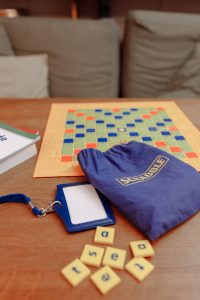
Tenses and verbs are two lifelines of the English language. While most believe that the three tenses Present, Past and Future sums up the entire grammar. Well, it’s not true but yes tenses and verbs are an indispensable part of the grammar. These games will speed up your learning and understanding. 


Age Group: 6 years+

Link: https://www.englishclub.com/esl-games/grammar/verb-tense-games.htm 


Adverb Games 

Just the way we talk about adjectives after nouns; we talk about adverbs after verbs. It’s not that they are used with verbs alone. Adverbs can be used with nouns, adjectives, verbs and adverbs too. 

Let’s find out from the examples: 

Noun: Place the box carefully. 

Verb: He intentionally moved the bag.

Adjective: You can tell, he was clearly attentive

Adverb: You can definitely never predict what will happen next in life.


Age Group: 7 years+

Link: https://www.englishclub.com/esl-games/grammar/adverbs.htm


Preposition Games 

Direction, position and time hold an importance in making a connection among the various parts of speech. Prepositions are those words that make a sentence meaningful with their correct usage and placement.  We instruct the kids from the beginning what to keep and where to keep; such simple games of prepositions makes it easier to identify locations and give directions and instructions. 


Age Group: 6years+

Link: https://www.gamestolearnenglish.com/prepositions-game/ 


Framing Sentences/Phrases 

All the above parts of speech are mostly taught in a fragmented manner. Therefore, we struggle while putting them together. Oftenly, the errors we make arise due to this fragment learning. You can bring your understanding of various parts of speech by forming sentences or phrases in correct order. 


Age Group: 5 years+

Link: https://www.gamestolearnenglish.com/fast-phrases/ 


Generate Your MadLibs 

Learning grammar isn’t supposed to be monotonous. There are fun games too and one such game is Madlibs. Your entire understanding of parts of speech can be implemented over here. It is the culmination of all the parts of speech where a student has to fill in various blanks in a story from their understanding. 

This can be adapted into games like rapid fire. 


Age Group: 9years+ 

 Link:https://www.glowwordbooks.com/blog/category/kids-online-mad-libs/  


Link: https://www.madtakes.com/libs/188.html 


Link: https://www.squiglysplayhouse.com/WritingCorner/StoryBuilder/ 
 

Digital English Language Games For All Age Groups

By Pooja Chhabra

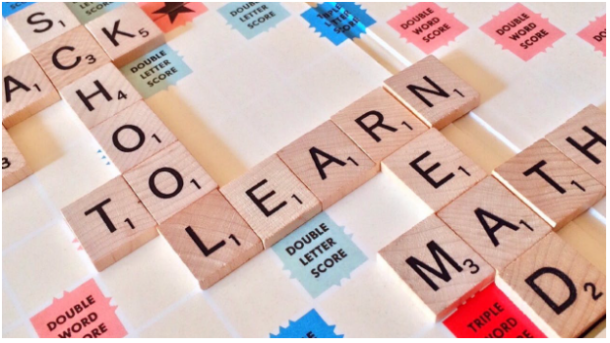
Games are recreational and can prove to be yielding by all means if considered generously. Their incorporation in language has always played an incredible role in the learning process. Games are versatile enough to be adapted in various ways for digital and in-person language sessions.

Here, we are listing down a few language games that can be incorporated by teachers in their class as well as by parents to involve kids in productive screen time.

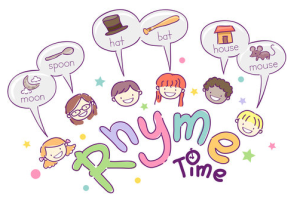
PAIR UP THE RHYMING WORDS

Even before our kids enter school we introduce them to rhymes. The rhythm and rhyme involves young minds. We need to bring back that idea of involving kids in learning and generating new rhyming words.

Age Group: 5 to10 years

Link: https://www.englishclub.com/esl-games/pronunciation/rhyming-pairs.htm 

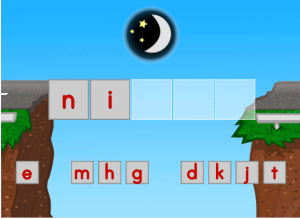
CAN YOU SPELL IT?

Many children struggle with new words and their spellings. There are various games to involve kids to rectify their spelling issues rather than waiting for them to overcome them over time. Spellings can be introduced in various different ways such as missing letters, word search, unscramble and many more.

If the child is struggling with phonetics then games like long and short vowel sounds, initial sounds, blends, audio word match are tested as useful.

Age Group: 5 to 14 years

Link: https://www.spellingcity.com/spelling-games-vocabulary-games.html# 

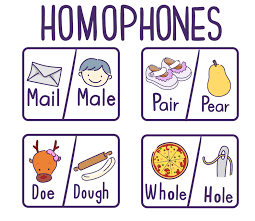
KNOW THE HOMOPHONES

“Write see not c.”

“Write see not c.”

“I said weight, not wait.”

Welcome to the world of homophones, we all have struggled with words having the same sound but different spellings but not anymore.

It’s not just kids; even adults are not big fans of them. Here is a fun way of learning and remembering them that caters to a wide range of language learners.

Age Group: 5 years to Adults

Link: https://www.englishclub.com/esl-games/pronunciation/matching-homophones.htm  

CROSSWORD PUZZLES

This is never getting old for language lovers. From solving crossword puzzles in a textbook to locating them in newspapers is a long journey to travel. Here is a digital mid way for beginners to satisfy your budding curiosities and develop vocabulary.

Age Group: 7years+

Link: https://www.englishclub.com/esl-games/vocabulary/crossword.htm

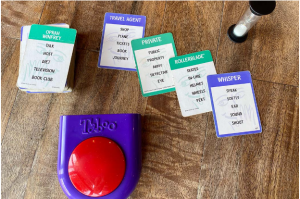
TABOO

This is never getting old for language lovers. From solving crossword puzzles in a textbook to locating them in newspapers is a long journey to travel. Here is a digital mid way for beginners to satisfy your budding curiosities and develop vocabulary.

Age Group: 7years+

Link: https://www.englishclub.com/esl-games/vocabulary/crossword.htm

BUILD VOCABULARY

Screen time at a very young age is not advisable therefore parents can take suggestions from the link and involve the young learners in developing their vocabulary. This can be helpful for older children and adults to develop vocabulary on specific  topics such as countries, music, food and more.

Age Group: 3+

Link: https://www.gamestolearnenglish.com/fast-english/ 

Why Do We Name Them Smart Learners? 

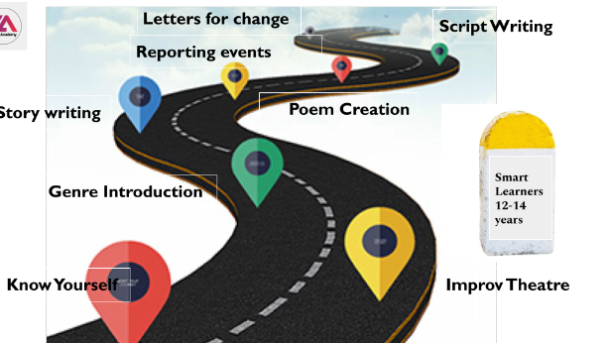
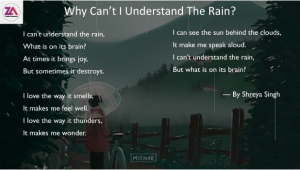
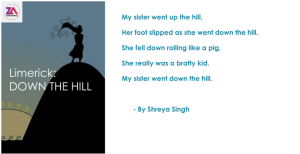
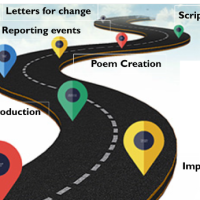
Smart English language learners are a group of learners in the age group 12-14 years. This age group is smart enough to express their emotions blended in words. We aim at imparting them with the right amount of vocabulary to express, understanding of language to edit their work and present a final draft. Here is a glimpse of our Smart Learners first final drafts of ‘Module: Poem Creation’  Zeals Academy offers integrated English language courses from age group 6 to 60. Here are the milestones achieved by smart learners. The process behind these achievements are extensive little steps.  Join Zeals Academy to experience new age English Language Learning. Fill the form to book your trial session. https://forms.gle/4dyb8qwuRKBbHjaT6 We are available on: Instagram Facebook Youtube LinkedIn  
7 Ways Theatre Can Be Incorporated in Language Classroom

By Pooja Chhabra


Drop Dead!!!!

Imagine a man on the street shouting the phrase with a number of exclamations observable in his tone. As you look around, you find that he was just kidding. Nobody dropped dead on the street. Despite shouting a lie he caught your eye.

That’s the power of performance.


What is a performance?

An artist in a costume on a stage performing with loud expressions and gestures following his/ her dialogues from the script. But the man on the street was not wearing any different costume or saying a dialogue from any script. But he got the audience to believe. That’s when his dialogue became his performance.

Theatre and performances are not limited to the stage, costume, dialogue, character and seated audience. A person’s audience is every other person who is ready to listen, be it an interviewer in a closed cabin, a bunch of people in a house warming party, or a crowd gathered around.

One can find their audience simply by keeping them hooked.

Similarly, life is a stage and we come across an audience everyday.  What we miss is the opportunity to present our performance because we are waiting for that perfect stage with a director to call upon us Lights! Camera! Action!

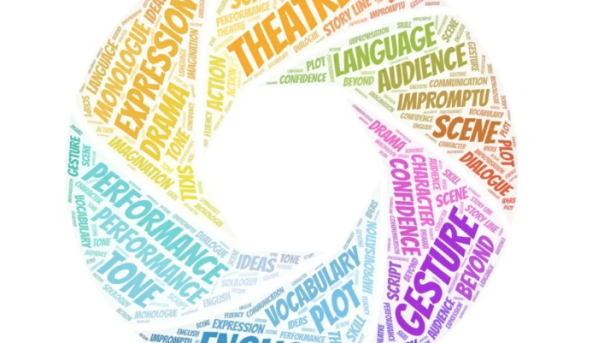
A performer doesn’t need these back drops. A performer needs Language, expressions, tone and gestures irrespective of other things.

A Language classroom is a perfect place to turn yourself into a performer for life. The question here is: What language class can bring to find the performer in you?


  1. Soliloquy

When we hear this word we remember Shakespeare because he told us to be or not to be. Soliloquy reflects the state of mind of a character, reveals secrets and as a character, it allows you to be in those shoes; speak, act, behave.

 

  1. Monologue 

Another important activity is Monologue when you know the stage is all yours and everyone else is here to listen. Be it a conversation or a real stage. Monologues prepare you to conquer that platform and audience watching you.


  1. Dialogue Conversation 

Real life doesn’t work on scripts. So our conversations can’t be planned but they can be practiced. A practiced conversation is always better than impromptu. This would prepare you to slide away from awkward silence in a small talk, a smooth goodbye and dealing with embarrassing questions.

 

  1. Performing on a script 

You must be wondering, isn’t this contradictory to the previous one. Yes sure does, but have you heard about stepping into someone’s shoes? That’s exactly the role of this activity in a language classroom. Learning  sensitivity, empathy, cultural awareness all can be introduced comfortably.

 

  1. Improv Theatre 

We live in a LIVE world without script, improv prepares you for that with characters on stage directing themselves and writing their own plot simultaneously. A fun, spontaneous experience to evaluate and enhance your creativity.
 

  1. One Act Plays 

Speech improvement is synonymous to One Act Plays. You are not concerned with setting and costume, instead it aims at producing a single impact in one go and clearly specifies the message it intended to. A concise play apt for a short duration language session.


  1. Object Theatre 

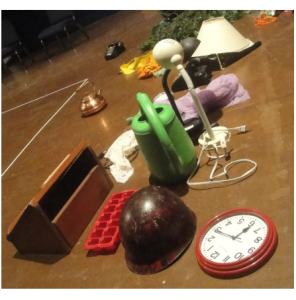
This is not a new concept to be introduced. This has been practiced by young kids for generations. We often secretly admire when we see kids talking to the toys. They are a part of object theatre from beginning. Personifying the object and thus learning important skills such as voice modulation, expressing emotions. It is a wonderful activity to explore the inner emotions of young children.



 

Theatre has a wider scope in a child’s lifestyle, development and growth so let’s not limit its scope. It’s time we incorporate theatre in language learning skills. Zeals Academy offers an integrated approach when it comes to language skills. Click the link below to register for the trial session. https://forms.gle/SHopD56ATJiMEhwV6

7 Incredible Ways To Work on English Speaking Skills

By Pooja Chhabra

Language comes naturally to us, especially when talking about speaking skills. Think about the time when you acquired your first language or a toddler acquiring their first language. One always starts with babbling, moving on to one letter, then two-letter word speech and so the journey continues. It’s the sensitive period of language development (7 months- 6 years), the early exposure to language helps to build a strong and better structure. While in critical period language (above 6 years) learning requires more effort. We move from the aspect of acquiring to learning. Though, we still acquire certain words with repeated exposure towards them. For instance, the words or phrases you come across regularly. Even if you are not a fan of that language, it will reflect in your speaking involuntarily.

Here are some suggestive ways you can opt for before enrolling yourself in a new language learning course to build the basics. 

PICK A HOBBY

Hobbies are a wonderful way to learn and explore. The best part is your hobby could be basic or technical, it’s still going to teach you a lot. For Instance, Your hobby is baking, whether you are a newbie or specialist, we all need a certain path to walk on. So start learning from experts in language as well as in their field. A Simple step to do is go to YouTube or their blog and follow them. I follow Chef Shivesh to pursue my hobby and to learn baking-related vocabulary.

READ A PARAGRAPH

We all know reading is an equally essential skill as speaking. Reading won’t turn you into a bookworm instead it will keep you updated. Reading requires your concentration, enhances your knowledge, and helps in your fluency. We live in a digital world where you can ace your smartphone by reading and following instructions only. There are many ways you can involve reading as part of your regular life. Start with the field you are interested in be it Films, Books, News, Politics, Science, and others. For News and Articles, you can follow Google News if you are an ios user you can follow Apple News too, If you are interested in staying up to date download inshorts. You can download Wattpad if your heart lies in stories. We still admire traditional methods when it comes to reading: newspapers and books are still there and will remain.  


WATCH MOVIES/SERIES WITH SUBTITLES

Speaking is a ¼ skill when it comes to language learning in the modern world. What next to do? It’s Listening. When we combine entertainment and listening skill there is no better combination. Audio Visual method of teaching language skills started long back to understand pronunciation and articulation. You can dive into watching new series, shows, and films depending upon your interest. There are plenty of options available. Go for English TV Channels or customised experience as per your needs you can explore OTT platforms such as Netflix, Amazon Prime Videos, Disney+Hotstar.


FOLLOW A SOCIAL MEDIA PAGE

Scrolling throughout the day is never tiresome. Why not try some scrolling through informational pages? Now, social media can do wonders and maybe it can help you in making your learning journey wonderful. Search for the type of information you need and pick the best from plenty of options. You can follow Zeals Academy  English vocabulary, Interview skills, and new blogs.      


TRY FREE APPS

There are plenty of apps to enhance your speaking skills. You can pick your level, your first language, and even learn through translating your first language sentence. You can practice conversations and pronunciations through English Speaking Practice, Duolingo will help you translate and learn up to 23 languages. While you can also try apps like Lingbe, Beelinguapp, and Hello Talk.


CREATE A WORD WALL

Retaining information plays a crucial role when it comes to learning. The best way to retain it is by creating a corner or wall and putting out the new words, phrases, information in that corner. So, every time you enter the room the corner will grab your attention, and scanning the same things for a long time will automatically register them in your mind. Thus, your Language learning journey will turn out well.


 CONVERSE WITH ARTIFICIAL INTELLIGENCE

Last but not least brings us back to technology we should be thankful for. Smartphones are now having Artificial Intelligence in them. This can help you in giving instructions and taking instructions too.

One such conversation is: 

Me: Google, Book me a cab.

Google: What’s your destination?

Me: I want to go to Mandi House.

Google: Okay, a taxi to Mandi House.

The best part is AI is smart, they are not going to ask you the same question in every conversation. So, we have variety too.

What is an Integrated Learning Approach?

By Pooja Chhabra

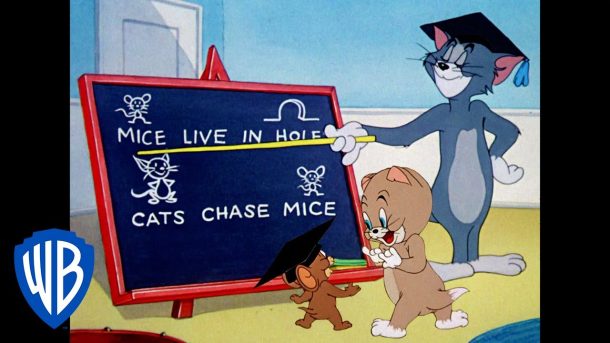
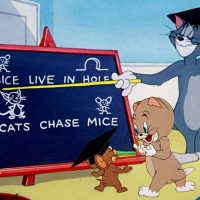
Do you remember Tom and Jerry from your childhood? A cartoon that we all must have lived, referring to our academics and us as former and latter.

Throughout our life academics chased us and we were creative beings finding ways to avoid it.

At Least, I did.

This brings us to the question: Why were we trying to avoid our academics? 

The answer is simple: it wasn’t fun like watching Tom chasing Jerry. Since the very beginning we were mechanised into the art of switching our brain system after 45 minutes. As a new teacher will enter the class, we have to leave behind the mathematical aura and dig ourselves into science or English textbooks.

This clearly doesn’t match the idea of an integrated learning approach when we are integrating all subjects under one roof in a stipulated time.

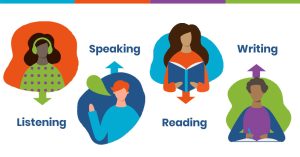
An integrated learning approach is a learning method where the curriculum is a hub of knowledge, understanding, skills and hands on experience. For Example: Language comprises literature, Vocabulary, phonetics, Reading, Listening, Speaking, Writing, Comprehension, Expression, Grammar and more.

English Language Skills

While the approach we opt to impart all the skills is segregated rather than whole. There are many scenarios in which a language topic can  cover many aspects following an integrated approach.

Scenario: Top to Bottom Approach 

Pick a text whether you are introducing alphabets, phonetics, grammar, vocabulary or Expression. This brings contextual understanding along with other skills. A text would help a  student comprehend the situation, picking up words and presenting their expressions in the context itself. A child is never too young or too old to understand a context. All we need is to pick the text wisely.


Scenario: Art in language 

Art makes the lessons lively, colours bring warmth and imagination is always open to splurge. Whether you are dealing with adults or young learners, incorporate art that involves their senses. Young learners can draw out imagination on a paper, adults can implement their imagination in the form of imagery, a literary device.


Scenario: Critical and logical thinking

The thing that makes my processing, evaluation and analysis different from others is my background. My social, economic, political, technological environment can impact the way I perceive things happening in my surroundings. Consequently, I may have a different opinion  than my peers and facilitators. A student needs a platform to present that opinion and find the logic behind it. That makes a classroom unique and whole.

Scenario: Digital Literacy 

We spoke about 21st Century skills as the need of the hour. There is no means to escape this reality. It’s another world that moves on a click with language playing a major role. We learnt copy paste too soon. There is a need for training to evaluate knowledge that spreads too quickly through the web.

Train the students how to work on the projects rather than copy paste the information and present digitally or in print.


A different approach marks the distinction. All we need to do is change the perception and perceive things with an alternative mindset.

All You Need To Know About 21st Century Skills

By Pooja Chhabra

Who knew Covid-19 will hit us in our face? 

We will be spending years under lockdown, studying online and working from home. Yet, we successfully overcame all the problems and found a solution sooner or later.

What if we were prepared in advance?

The situation wouldn’t turn worse and we were back on tracks in no time.

21st Century skills are our readiness towards effective communication, critical thinking, logical reasoning, collaborating, adopting a global mindset, engaging with information and technology.

It’s not just limited to learning a new set of skills. It’s about forming a habit to adapt these skills to our routine. We must have come across many situations where we criticise a particular state. But, when asked for a better solution we fall short of words. That’s when we realise it’s easier to criticise than to find a solution, to put ourselves in someone else’s shoes. This is critical thinking for you.

We need 3Ls to be effective and efficient.

Learning Skills:

The first L includes learning critical thinking, creativity, collaboration, and communication.

While communication is the precondition to excel in further learnings, being it verbal, non-verbal, listening, or even written. Our thinking, reasons, creativity needs to be communicated to others. A lost connection in terms of communication can impact our additional efforts too.

Literacy Skills:

A person who could write their name and put a signature is considered literate in our country. Are we still interested in living with this attitude?

Literacy is not limited to knowing and understanding a language. Its dimensions are broad.

Media literacy, Information literacy, and Technology literacy. These essentials are necessary to evaluate and create content to further communicate through the help of media, information, and technology.

Life Skills

Lastly, the third L intimates towards aiming global. Be flexible to adapt, the world is changing so we have to be on our toes to accept the change. Bring your inside leader to take responsibility for the change. Take initiatives and discover your way. You have to learn accountability for your actions and fulfilling your commitments. Finally, interact and understand the importance of society and diversity.

How does Language help in these skills?

A limitation is no explanation in this swift world. Hence, limiting ourselves to grammatical rules, translation, and exposure to only listening or reading skills cannot be the solution. Hence, language teaching methods need to be altered. An application-based approach to be adopted for holistic Development.

What kind of learner are you: Visual, Auditory, or Kinesthetic?

By Pooja Chhabra

Learning is an integral part of our life and not necessarily it’s limited to books and classes. Instead, it’s the life experience that teaches us the most valuable lessons.

We have heard many times, every child is different, children learn at their own pace and so. Along with pace, there is another difference among different learners. It’s their learning style.

We have broadly classified learning styles into three:

  1. Visual Learner

A kind of learner who learns best when presented with some materials such as diagrams, photographs, charts, or videos. They tend to perceive information by looking, analysing the information provided, and results in the best learning experience and retaining the information. Using pictures, flash cards, graphical presentation of information are useful way of engaging visual learners and forming associations.

2. Auditory Learner  Listening is an important skill, an active listener can excel in their field. Auditory learners are amazing listeners. They do not prefer any sort of disturbance while listening. They can retain most information just by listening. You must have witnessed some students who do not take notes and still remember everything. They are auditory learners. Even writing notes can be a distraction for such learners.

3. Kinesthetic Learners Hands-on experience, this term is not new in today’s time. This term represents the teaching methodology for Kinesthetic learners. They are also known as tactile learners, which means to touch. This method is often opted in pre-schools and at a young age, where a child is taught through experimental methods. Such activities include making puppets, using props while storytelling, Use of gestures to memorize vocabulary.

Probably, you may be one kind of learner or a combination of these styles. There is no clear-cut definition that works for everyone. All you need is to explore the best method of learning for yourself so that you can maximize your retention.